La Boucherie
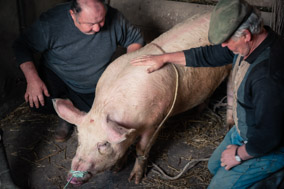
The pig slaughter in France traditionally takes place in the autumn and early winter, and the timing has practical considerations. It can start as soon as it gets cold, as the cold is required as a natural method of preserving the relatively large quantities of meat during the butchering.
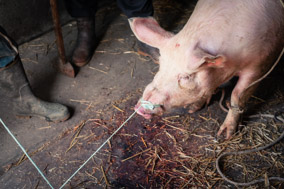
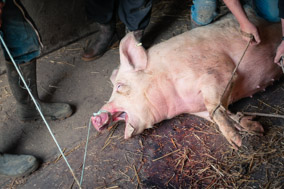
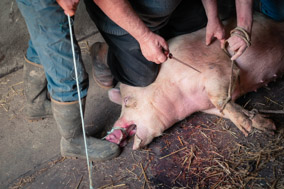
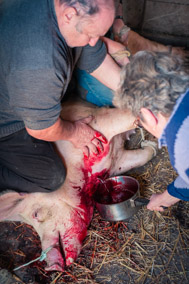
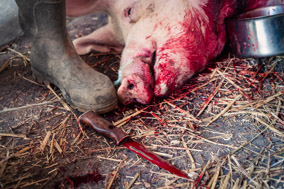
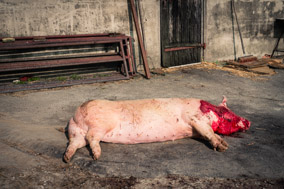
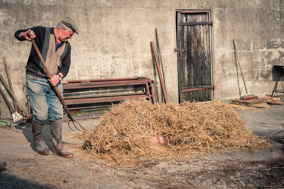
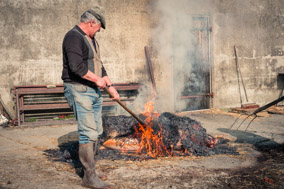
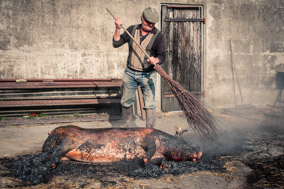
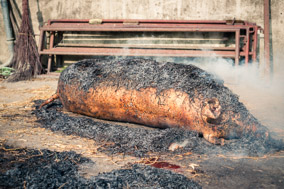
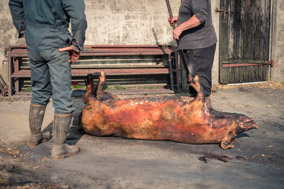
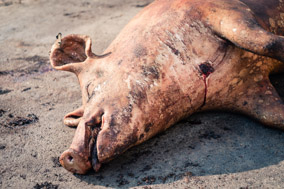
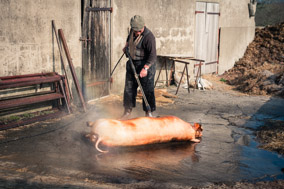
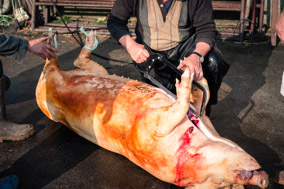
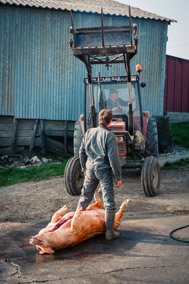
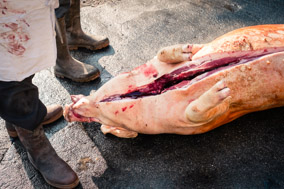
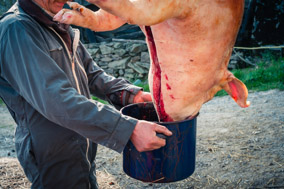
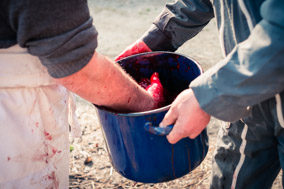
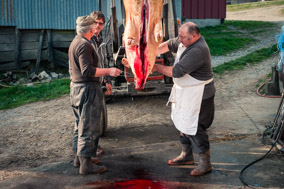
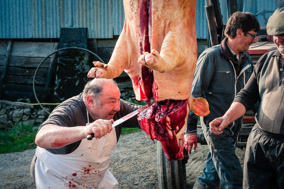
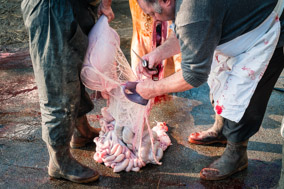
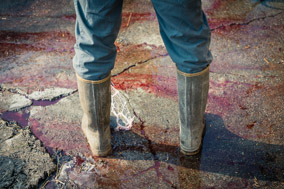
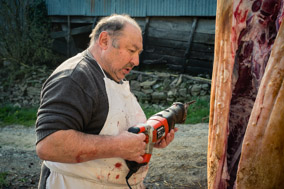
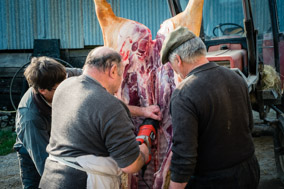
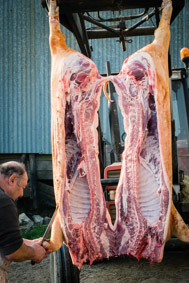
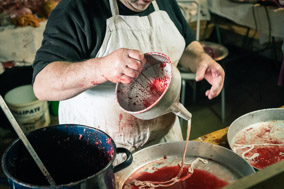
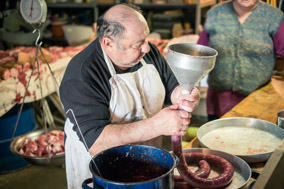
The pig is first rendered unconscious, typically by a blunt force to the back of the head. The animal is then exsanguinated (the blood being reserved for the making of Boudin), usually via the carotid artery and the jugular vein. After the blood is drained, the carcass is covered in straw and burnt to remove the hair before being meticulously cleaned. The body is then hoisted and eviscerated, the head is usually removed, and the body is cut into two halves. The halves are washed again to remove any remaining blood, bacteria or remains of bone.
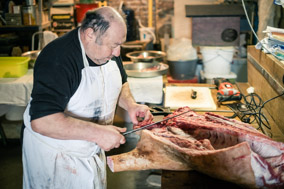
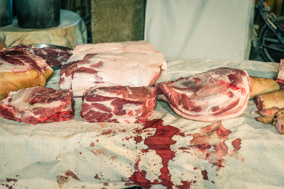
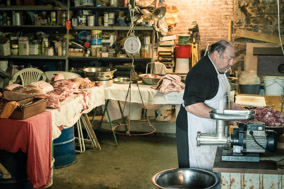
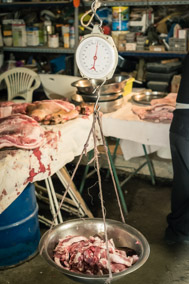
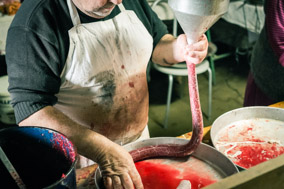
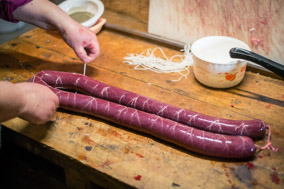
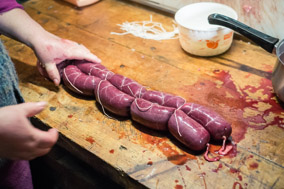
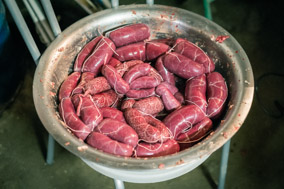
The meat will hang in an appropriate area (usually a spare barn) free of vermin or insects overnight to ‘rest’ and cool down in order to help with the process of cutting and deboning. Nearly all parts of the pig are reserved and used in some fashion. Aside from the prime cuts, the boutcher will produce a large quanity of sausages, boudin, paté, head cheese (pâté de tête), and rillettes from any scraps. The lard is reserved for use in cooking and flavoring dishes.